
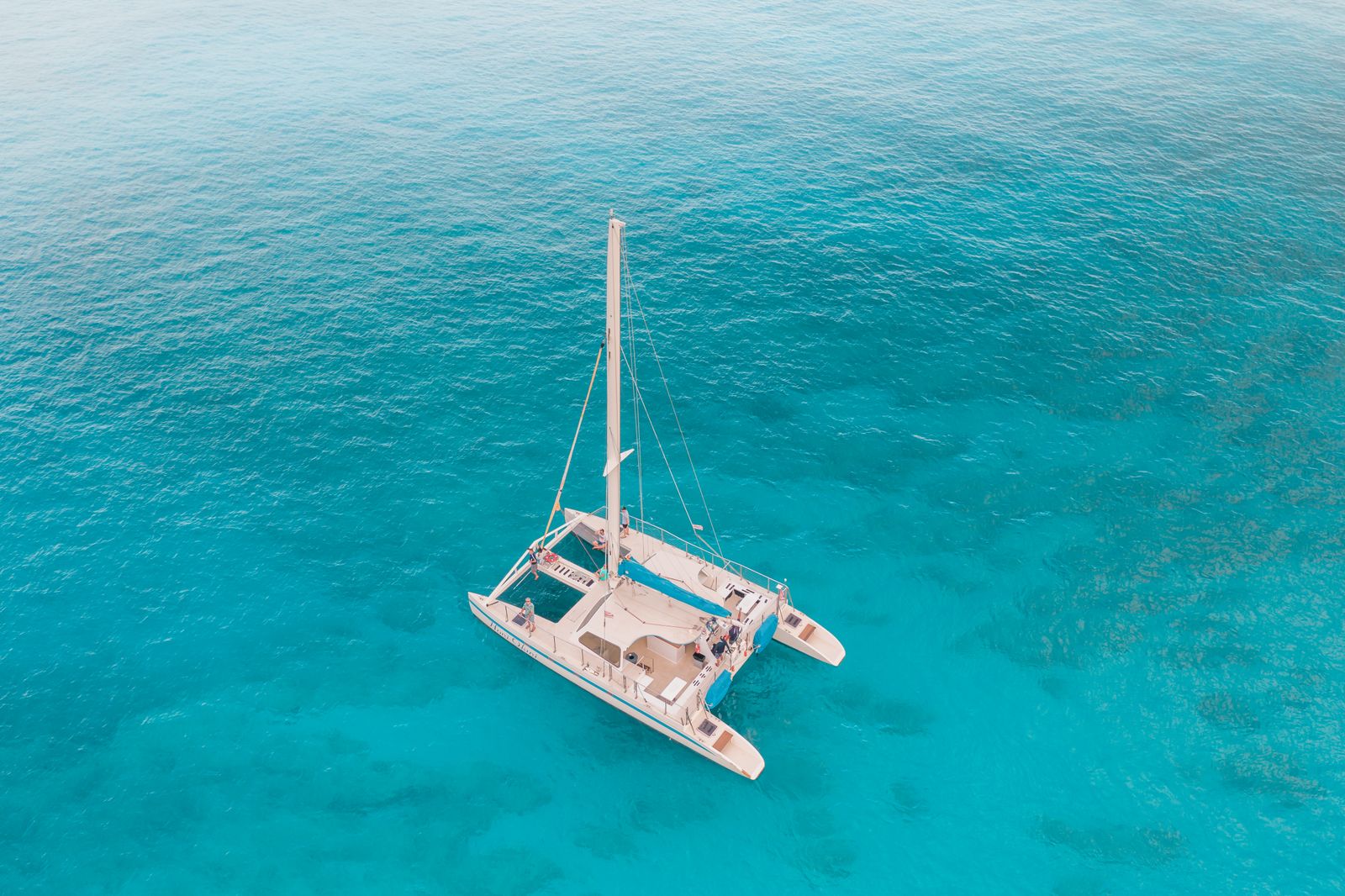
A catamaran feels like the easy choice the first time you step aboard — flat decks, no heeling, a cockpit you can walk across without grabbing a rail, cabins in the hulls that feel like actual rooms. All true. It’s also a fundamentally different boat than a monohull in nearly every way that matters once you start shopping: what it costs to buy, where it can dock, how it’s insured, and how it behaves in a blow. This guide covers what actually matters before you buy your first catamaran, so the dream doesn’t turn into a five-figure lesson.
Why Buy Your First Catamaran Instead of a Monohull
Two hulls buy you three things monohull sailors envy: stability (a cat doesn’t heel, which matters enormously for seasick-prone crew, nervous guests, and cooking underway), shallow draft (often 3–4 feet versus a monohull’s 6–7, opening skinny anchorages and channels that would ground a keelboat), and space (the bridgedeck and wide beam give you living area a monohull of the same length can’t touch). At anchor, a catamaran sits flat and quiet where a monohull rolls.
The tradeoffs are real and worth knowing before you fall in love: that width (a 40-footer can be 22+ feet wide) limits which slips fit and costs more to dock; catamarans are more expensive to buy and dock foot-for-foot than monohulls; and while they’re extraordinarily stable, a cat that’s badly overloaded or caught badly canvassed behaves differently than a keelboat in heavy weather — they don’t round up to spill wind the way a monohull does. None of these are dealbreakers; they’re just the other side of the ledger.
What Size Actually Makes Sense
- 35–40 feet — the realistic entry point for a couple or small family. Manageable short-handed, easier to find slips for, and far cheaper to own than anything bigger.
- 40–45 feet — the liveaboard and long-range cruising sweet spot: room for guests without needing paid crew, and enough tankage and storage for real passages.
- 45+ feet — comfortable, but it starts demanding real experience or hired help to handle, and dock fees climb steeply with the extra beam.
The counterintuitive rule for first-timers: size down before you size up. A 45-foot cat with two people aboard is more boat to maintain, more sail to handle, more systems to fail, and a shorter list of marinas that will take you. Buy the smallest boat that does what you actually plan to do, not the biggest you can finance.
What You’ll Actually Pay
Purchase prices, roughly:
- Used, 35–40 ft: $100,000–$250,000 depending on age and condition
- Used, 40–50 ft: $250,000–$700,000
- New from the big production builders (Lagoon, Leopard, Fountaine Pajot): ~$300,000–$450,000 for the smallest models, well past $1M for larger or premium layouts
The sticker is the easy part to plan for. Ownership cost is what ambushes first-time buyers, and it’s worth internalizing before you shop: budget insurance at 1–2% of value per year, maintenance at 10–15%, and dockage at $1,000–$5,000 a month depending on location and the boat’s beam (catamarans often pay a 1.5x width surcharge). Add haul-outs, bottom paint, sails, and the inevitable systems failures, and a $300,000 catamaran can easily cost $40,000–$50,000 a year before you’ve sailed a single mile. The old joke — a boat is a hole in the water you pour money into — is truest for first-time cat owners who budgeted only for the purchase. BoatUS is a solid resource for the full ownership-cost picture.
New vs. Used vs. Ex-Charter
New gets you a warranty, current electronics, your choice of layout, and zero mystery history — at full retail, with steep depreciation the first few years (that hit is someone else’s gain on the used market). Private used is the value middle ground: let the first owner eat the depreciation, and you often get a boat already fitted out with the gear a new one needs thousands in add-ons to match.
Ex-charter is the tempting one — often a third of new-boat money — and it deserves a specific warning. Charter cats are sailed hard by rotating crews who don’t own them, so engines, rigging, sails, and interiors take a beating, and they’re often stripped of cruising gear. A well-maintained ex-charter boat with documented service can be a genuine bargain; a neglected one is a money pit wearing a discount. The difference is entirely in the survey and the paperwork, which brings us to the one rule you cannot break.
Never, Ever Skip the Survey
A professional marine survey and sea trial runs $1,500–$3,000 and is the single best money you’ll spend in the whole process. A surveyor finds what a walkthrough can’t: delaminated decks and bridgedeck, wet core (moisture trapped in the fiberglass sandwich), worn or age-expired standing rigging, osmotic blistering in the hulls, tired engines, and prior structural repair. On a six-figure purchase, a $2,500 survey that either confirms the boat or kills the deal is the cheapest insurance of the year. Get a separate engine survey for the diesels and a rigging inspection if the survey flags it — and make the offer contingent on all of it. The same non-negotiable logic applies on land, where a pre-purchase inspection is exactly as essential when buying a used performance car.
Questions to Ask Before You Buy
- Private-owned or ex-charter — and if charter, how many seasons and how was it maintained?
- Engine hours on both motors, and their service records?
- Has the standing rigging been replaced, and when? (Insurers often require replacement at 10–15 years regardless of appearance.)
- What slip or mooring will actually fit this beam near where you’ll keep it — and what does it cost? (Confirm this before you buy, not after.)
- Any history of osmosis, delamination, or structural repair?
- Sail age and condition, and when the running rigging was last replaced?
The Bottom Line
A catamaran buys you stability, shallow-water access, and living space — at the cost of a wider, pricier boat and a total cost of ownership that dwarfs the sticker. If you’re going to buy your first catamaran, do it in this order: size down before you size up, confirm the slip before the boat, always get the survey, and budget for the marina before you budget for the hull. Do that, and the flat-deck dream stays a dream instead of becoming a cautionary tale.
Recommended Gear
A few items worth owning before you start walking docks and scheduling surveys:
- Marine moisture meter — the same tool surveyors use to find wet core; great for pre-screening boats before you pay for a full survey
- Handheld VHF radio — you’ll want your own for sea trials, and it’s required safety gear you’ll keep for the life of the boat
- USCG-approved life jackets — buy your own rather than trusting the mildewed set that came with the boat
- 7×50 marine binoculars — the standard for spotting marks, mooring fields, and hazards from the helm
As an Amazon Associate, Infinity City earns from qualifying purchases.