
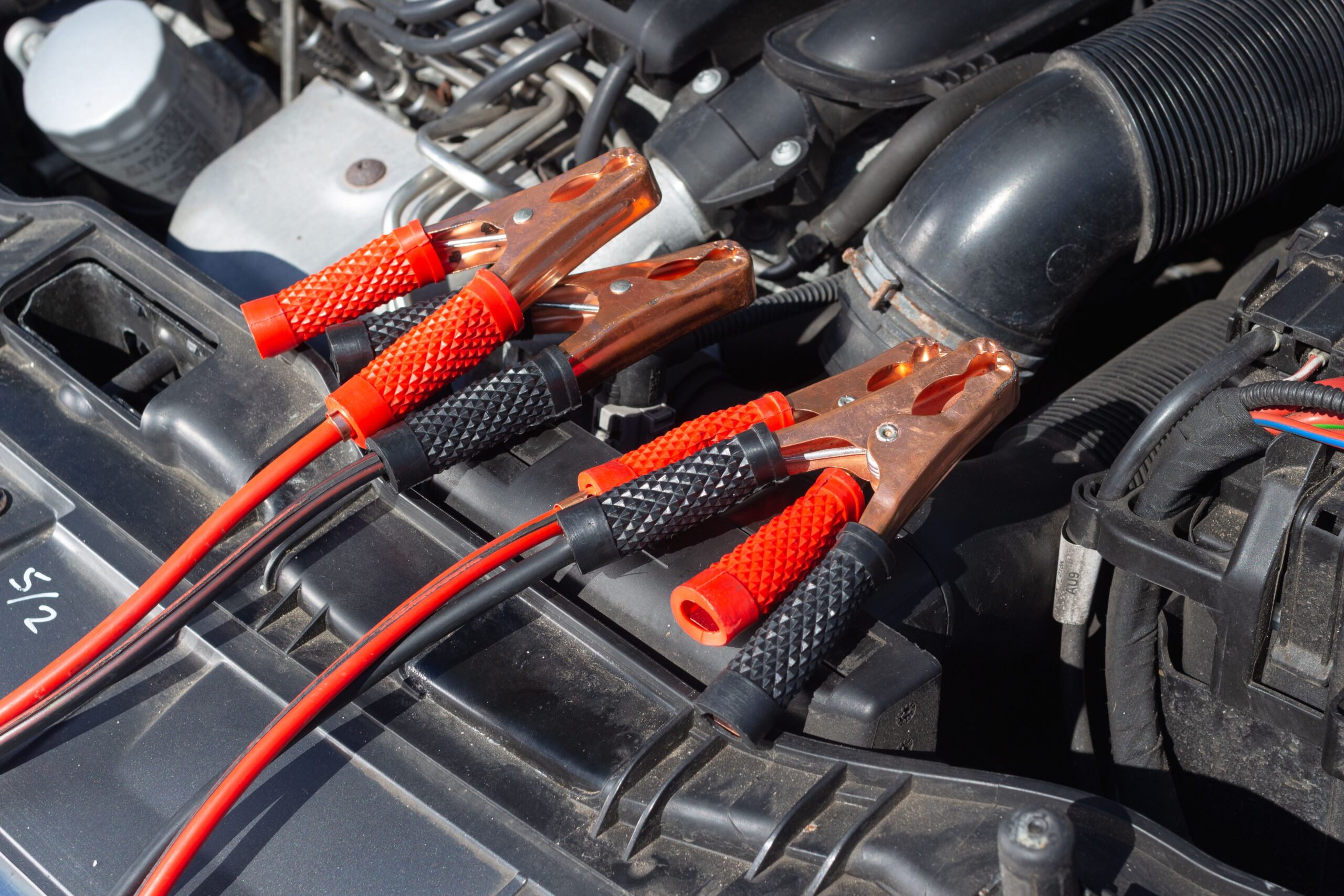
A dead battery is one of the most common roadside problems you’ll ever run into, and it always seems to happen at the worst time. The good news: here’s how to jump-start a car safely once you know the correct order of steps — it just takes a little care around the battery terminals and a working set of jumper cables.
This guide walks through the full process from start to finish, plus the safety details that often get skipped.
What You’ll Need
- A second, running vehicle (the “donor” car) or a portable jump starter/battery pack
- A set of jumper cables (or a jump starter’s built-in clamps)
- Work gloves and safety glasses, ideally
- A flashlight if it’s dark out
- Your owner’s manual, in case your vehicle has specific jump-start instructions or a designated grounding point
Before You Start: Safety Checks
A few quick checks before you touch any cables will save you a lot of grief:
- Park the donor vehicle close, but make sure the two cars aren’t touching.
- Put both vehicles in Park (or Neutral with the parking brake on for manuals), and turn off the ignition on the dead car.
- Turn off accessories like headlights, radio, and climate control on both vehicles to reduce electrical load.
- Inspect the dead battery. If you see cracking, leaking, or a swollen case, do not jump-start it — a damaged battery can leak acid or, in rare cases, rupture. Call AAA or another roadside assistance service instead.
- Check that your jumper cables aren’t frayed or corroded at the clamps.
Step-by-Step: How to Connect the Cables
The order you connect the cables matters — it’s the single most important part of doing this safely. Follow these steps exactly.
1. Connect the first red clamp to the dead battery’s positive terminal
The positive terminal is marked with a plus sign (+) and is usually larger than the negative terminal. Clamp the red cable firmly onto it.
2. Connect the other red clamp to the donor battery’s positive terminal
Make sure it has a solid, metal-to-metal connection. A loose clamp won’t transfer enough current to start the car.
3. Connect the first black clamp to the donor battery’s negative terminal
This one’s straightforward — negative to negative, on the working battery.
4. Connect the final black clamp to an unpainted metal surface on the dead car — not the battery
This is the step most people get wrong. Instead of clamping the last connection directly to the dead battery’s negative terminal, attach it to a metal bracket, the engine block, or another unpainted bolt away from the battery. Grounding it this way reduces the chance of sparks igniting any hydrogen gas that batteries can vent, especially older or stressed ones.
Starting the Car
- Start the donor vehicle and let it run for a couple of minutes. This lets the dead battery pick up some charge before you try to start the other car.
- Try starting the dead vehicle. If it doesn’t start on the first try, wait a minute and try again — don’t crank the starter repeatedly.
- Once it starts, let it idle for a few minutes before disconnecting anything.
Removing the Cables (in Reverse Order)
Disconnect the cables in the exact opposite order you connected them:
- Black clamp from the unpainted metal surface on the formerly dead car
- Black clamp from the donor battery’s negative terminal
- Red clamp from the donor battery’s positive terminal
- Red clamp from the formerly dead battery’s positive terminal
Be careful that the clamps don’t touch each other or any metal while you’re removing them.
After the Jump-Start
Getting the engine running again is only half the job. A battery that died once will often die again unless you find out why:
- Drive for at least 20–30 minutes, or run the engine at a higher idle, to let the alternator recharge the battery.
- If the car struggles to start again soon after, the battery may not be holding a charge anymore and could need replacement.
- Have the battery and charging system tested at an auto parts store or shop — many will test it for free.
- Check for a parasitic drain: a dome light left on, a phone charger, or a failing component can slowly drain a battery overnight.
- Most car batteries last 3–5 years. If yours is in that range and has needed more than one jump recently, plan on replacing it before it leaves you stranded somewhere less convenient.
Common Mistakes to Avoid
- Connecting the final black clamp directly to the dead battery instead of a grounding point
- Letting the clamps touch each other while the other ends are connected
- Trying to jump-start a battery that’s visibly cracked, leaking, or swollen
- Cranking the starter repeatedly instead of waiting between attempts
- Assuming the problem is solved just because the car started — always figure out why the battery died
Jump-starting a car isn’t complicated, but it’s one of those skills where doing the steps in the right order — and in the right place on the battery — is what separates a safe five-minute fix from a trip to the ER. Keep a set of cables in your trunk, know this order, and you’ll be back on the road with minimal drama. While you’re at it, it’s worth checking your engine oil too — a dead battery is a good reminder to look under the hood more often.
Recommended Gear
A portable jump starter is the single best upgrade here — no donor car required:
- Portable jump starter / battery pack — jump-start your own car solo, no other vehicle needed
- Heavy-duty jumper cables — thicker gauge cables handle the current more safely
- Work gloves — keep grease and battery acid off your hands
- Safety glasses — battery terminals can spark or vent gas
As an Amazon Associate, Infinity City earns from qualifying purchases.