
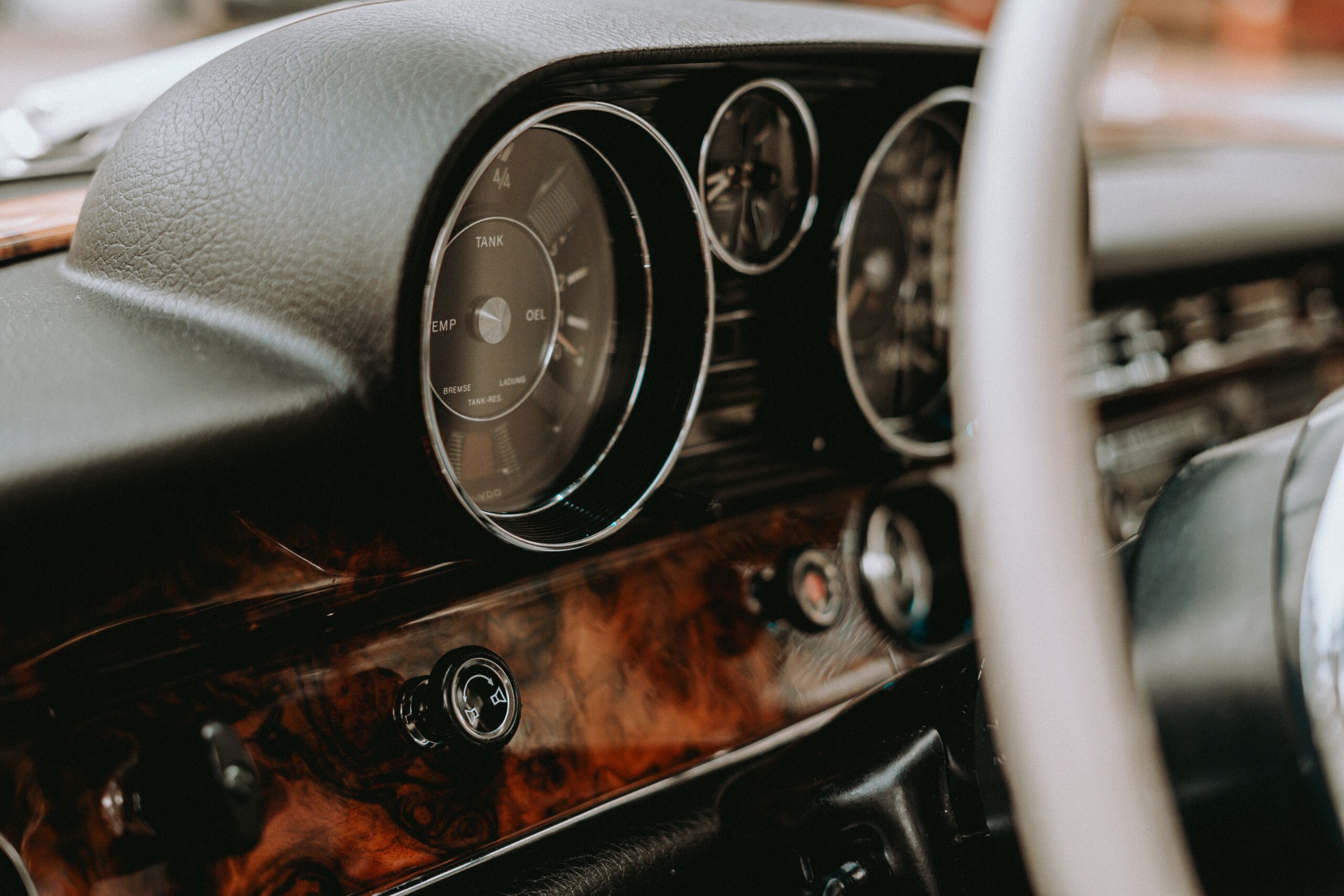
Cars change slowly enough that you don’t notice a feature is gone until you reach for it and it isn’t there — the spare tire that’s now a can of goo, the CD slot that became a blank panel, the little vent window your grandfather swore by. Some of these car features that disappeared were replaced by something genuinely better. Others were quietly cut for cost, weight, or liability, and drivers never got a vote. Here’s the honest accounting of what’s gone, why it left, and which losses actually sting.
The Full-Size Spare Tire
A real, full-size spare in the trunk used to be a given. Now most new cars ship with a skinny “donut” rated for 50 mph and 70 miles, a tire-inflator-and-goo kit, or nothing at all — roughly a third of new vehicles now come with no spare whatsoever. The driver: weight and packaging. A full-size spare and jack can add 40–50 pounds, and every pound fights the fuel-economy and range targets automakers are graded on; the space it frees up becomes cargo room or battery. The tradeoff is real, and it’s the disappearance on this list most likely to strand you — a goo kit can’t fix a blown sidewall, and a donut won’t cross three states. It’s exactly why knowing how to change a flat and how to read what’s on your sidewall matters more now, not less.
The Cassette Deck, Then the CD Player
The cassette deck went first, hanging on in base models into the early 2000s before CD players finished it off. Then CDs got the same treatment — squeezed out by USB, Bluetooth, and streaming through the 2010s until the slot simply vanished. Both followed the identical arc: the format people actually used moved on, and in-car hardware caught up a few years late, then leapfrogged it. The twist nobody predicted is that the replacement is disappearing too — physical media gave way to streaming, and now even the tuning knob is being swallowed by touchscreens.
Physical Buttons and Knobs
The newest entry on the disappeared list, and the most contested. Climate dials, volume knobs, and hazard switches have been migrating into touchscreens for a decade in the name of cost savings and a “clean” dashboard. The backlash has been strong enough that it’s actually reversing: safety bodies have started scoring cars on physical-control availability, and several manufacturers have publicly committed to bringing knobs back after owner complaints and distraction studies piled up. This is the rare case where a feature disappeared, drivers noticed loudly, and the market began to correct — proof that these cuts aren’t laws of nature.
Manual Window Cranks
Power windows were once a line-item upgrade; now the crank is the exotic, surviving mostly on stripped fleet and commercial trims. It’s a “feature” that became so universal it stopped being worth naming — and its near-extinction is a small marker of how far the baseline new car has climbed, for better (convenience) and worse (one more motor and switch pack to fail out of warranty). The same story swallowed manual door locks, manual mirrors, and the physical key you turn in an ignition.
Pop-Up Headlights
The defining sports-car look of the ’80s and ’90s was dead by the early 2000s, and it was regulation plus physics that killed it. Pedestrian-impact safety standards made a hard, mechanically-raised housing a liability in a collision, while advances in projector and later LED optics made low, flush, aerodynamic headlights both legal and better. Once the styling excuse to hide them evaporated, so did the pop-up. For how safety rules keep reshaping design, the IIHS is the standard reference. Enthusiasts still mourn this one the most — it’s the disappearance that was purely about character.
The Ashtray and Cigarette Lighter
Every pre-’90s car had a dash ashtray and a glowing-coil lighter as standard equipment. As smoking rates fell and 12V demand shifted to phone chargers, the lighter quietly demoted itself to a “12V accessory outlet” nobody plugs a lighter into, and the ashtray fell off the design brief entirely — now a dealer-ordered “smoker’s package” on the rare models that still offer it. A clean example of a feature disappearing because the behavior it served did.
Vent Windows and Opening Sunroofs
Those small, separately-hinged “vent” or “wing” windows ahead of the door glass were a brilliant low-tech way to scoop airflow without the buffeting of a fully open window. Better HVAC and tighter cabin sealing made them redundant, and they were mostly gone by the late 1970s. Opening sunroofs are following the same path from a different direction: manual cranks gave way to power sunroofs, and power sunroofs are increasingly giving way to enormous fixed panoramic glass roofs that flood the cabin with light but don’t open at all — trading function for a feeling of space.
The Manual Handbrake
The mechanical handbrake lever is quietly vanishing into a small “P” button — the electronic parking brake, which frees console space, shaves a bit of weight, and enables features like automatic hold. Most drivers won’t miss it. Enthusiasts do: the lever was a tool (handbrake turns, hill starts, a manual failsafe), and its replacement is one more thing you can’t operate when the electronics are asleep. It’s a fitting bookend to the broader story here — even as the handbrake goes digital, the manual transmission is quietly having a moment, proof that “disappearing” and “gone” aren’t the same thing.
Why Car Features Keep Disappearing
Sort the whole list and four forces explain nearly all of it: cost (fewer parts, simpler assembly), weight and packaging (fuel economy, range, cargo space), regulation (safety and emissions standards that outlaw the old way), and a genuinely better replacement (streaming beat the CD fair and square). None of these features vanished because an engineer decided drivers didn’t deserve them — they vanished because something usually invisible from the driver’s seat made the old way obsolete or unaffordable. The useful takeaway: the features disappearing right now — physical controls, the last knobs, the opening roof — are worth test-driving for while you still can, because you won’t notice they’re gone until you reach for the spare tire that isn’t there.